
Stables, Livery Yards, Riding Schools & Equestrian Estates
Feed, bedding, manure and water make equestrian properties naturally attractive to flies, rodents and other pests. We help Gauteng stable owners and yard managers control that pressure with a practical programme planned around horses, staff and daily routines.
A healthier, more manageable yard
Persistent pest activity can unsettle horses, contaminate feed and create avoidable work for grooms, instructors and yard managers.
Heavy fly and mosquito pressure can cause constant irritation, interfere with rest and make horses difficult to handle in stalls and work areas.
Rodents and stored-product insects can foul or damage feed. Affected bags may need to be discarded, increasing costs and disrupting feeding routines.
Owners boarding horses expect a well-run facility. Visible rats, excessive flies or contaminated storage areas quickly undermine confidence in the yard.
Look beyond the individual stall
Spilt feed, damp bedding, water troughs and sheltered edges can support flies, ants, cockroaches and rodents close to horses.
Open bags, loose grain and clutter attract rats, mice and stored-product insects. Rodent-proof storage and early detection are essential.
Manure piles, used bedding and slow removal cycles create major fly-breeding pressure, especially during warm or wet Gauteng weather.
Quiet rooms provide shelter for rodents and crawling insects, with the potential for damage to stored equipment, wiring and personal items.
Standing water, leaking fittings and organic build-up can support flies, mosquitoes and cockroaches around heavily used areas.
Long grass, vegetation, neighbouring land, refuse and damaged structures influence rodent, tick and other pest pressure around the yard.
Designed around animals and daily yard routines
We first identify the pest, breeding or harbourage areas and contributing conditions so treatment is focused where it is genuinely needed.
Horse locations, feed, water, ventilation and daily movement are considered before any treatment or monitoring point is introduced.
Products and equipment are kept away from exposed feed and drinking water, with clear preparation and re-entry instructions where required.
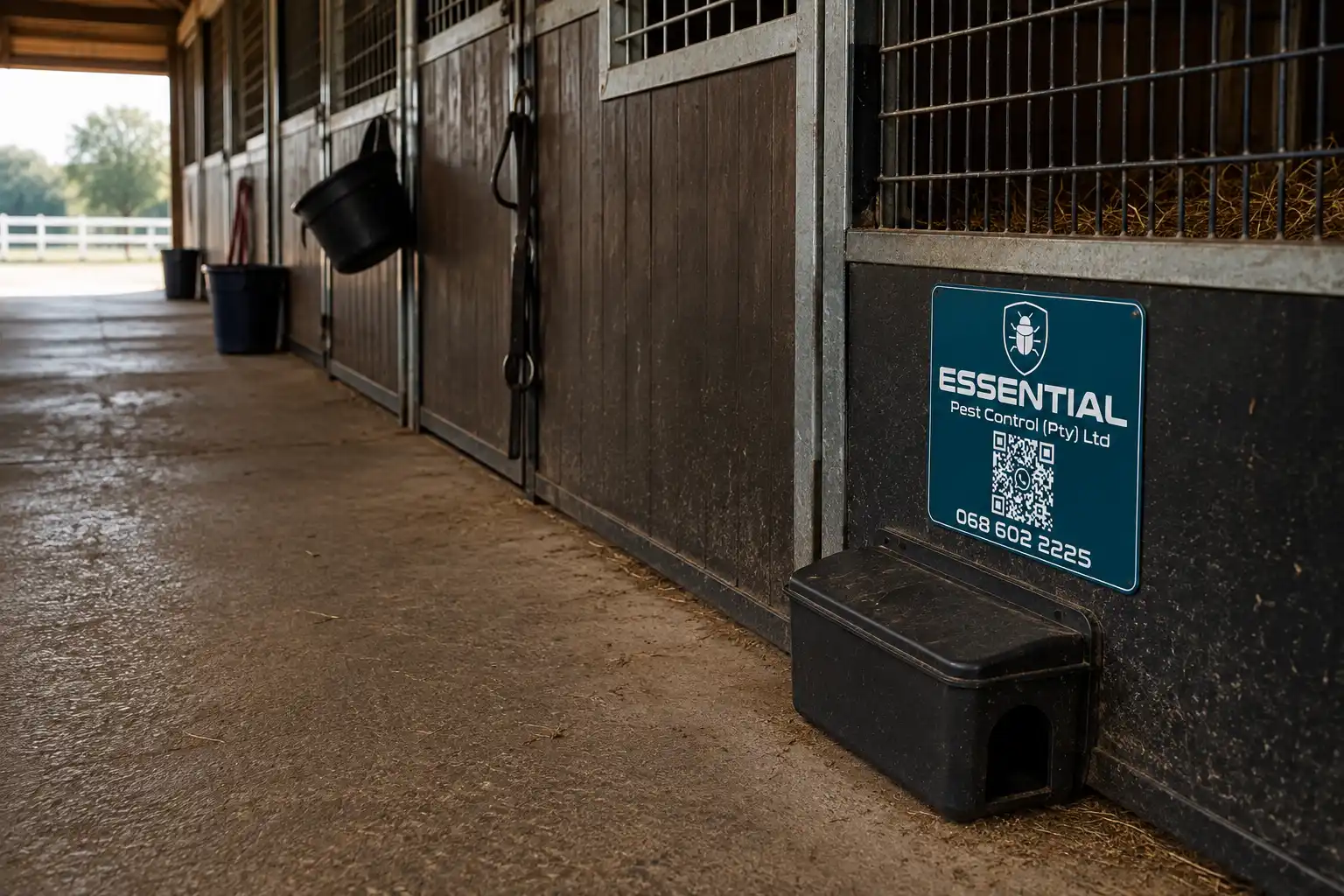
Where baiting is appropriate, tamper-resistant stations are carefully positioned and monitored away from horses, pets and routine stable activity.
We highlight manure, moisture, feed handling, vegetation and proofing issues that can keep pest pressure high between visits.
The control method is matched to the pest and affected zone rather than relying on unnecessary blanket spraying throughout the property.
Built around the individual property
We discuss horse numbers, stable routines, feed storage, manure handling, current pest activity and any sensitive animals or occupied areas.
The assessment covers stalls, feed rooms, waste areas, water sources, drains, buildings and the perimeter - not only the place where a pest was seen.
We set out suitable treatment and monitoring measures, visit timing, preparation requirements and practical actions for the yard team.
Findings are recorded and the programme is adjusted as seasons, horse numbers, manure loads or pest activity change.
Useful information for the yard manager
A service report should make it easy to understand where activity was found, what was done and what can be improved before the next visit.
Inspection and treatment records showing the areas checked, evidence found and work completed.
Activity observations that help distinguish isolated sightings from repeat pressure or seasonal patterns.
Corrective recommendations covering manure, moisture, feed storage, proofing, vegetation and cleaning practices.
Common pressure around horse properties
Manure, wet bedding, drains and standing water can produce relentless flying-insect pressure around horses, people and stable buildings.
Rodents and insects are drawn to grain, pellets and supplements, contaminating feed and exploiting gaps around storage and stable structures.
Moist service areas, vegetation and timber structures can support additional pest problems that require correct identification and targeted control.
Questions from stable owners and yard managers
It can be carried out responsibly when the treatment is selected and planned for the actual site. We consider horse access, exposed feed and water, ventilation and stable routines, and provide preparation or re-entry instructions where needed.
Usually not. They may need to be moved away from a specific treatment area for a stated period, depending on the pest, product and location. We confirm this before work begins.
Effective fly control usually combines targeted treatment with frequent manure removal, dry bedding, clean drains, repaired leaks and attention to other breeding material. Treatment alone cannot compensate for persistent breeding conditions.
That depends on horse numbers, manure handling, feed storage, the surrounding environment and pest history. Some yards need seasonal help; higher-risk facilities benefit from scheduled monitoring.
Rodent control must be carefully assessed. Where bait is suitable, it should be secured in tamper-resistant stations positioned to limit access by horses, pets, wildlife and unauthorised people.
Yes, after inspecting the area and identifying the pest. Exposed feed, supplements, equipment and water may need to be removed or protected before a targeted treatment is completed.
Other commercial facilities we support
Tell us where your facility is, which pests you are seeing and how the yard operates. We will help you define a practical inspection and control plan.