
Residential & Commercial · Rodent Control
A trap or two in the pantry catches the bold ones - the rest stay hidden, chewing wiring and insulation in the roof void. We combine exclusion, tamper-resistant baiting, so the whole colony is dealt with, not just the individual you spotted.
Why supermarket traps aren't enough
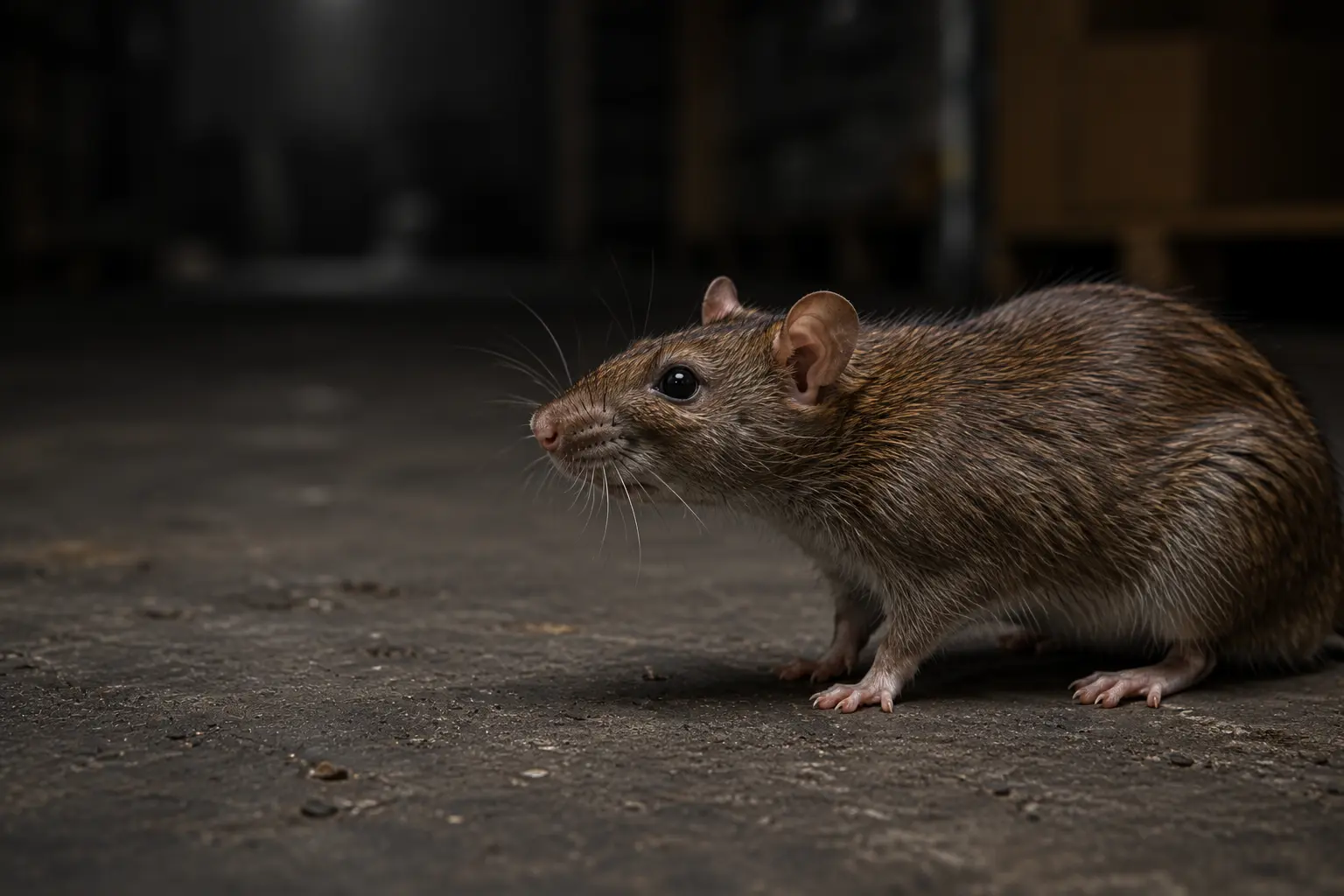
Rats in particular are neophobic - they avoid new objects, including traps and bait stations, for several days before they'll approach them, so a single trap set out once rarely catches more than the odd curious individual. Meanwhile a breeding pair of mice can produce dozens of offspring within a few months, and both species will gnaw through wiring, piping and insulation in roof voids and wall cavities, creating a genuine fire and damage risk long before numbers look obvious. Our approach pairs entry-point exclusion with tamper-resistant bait stations, so the population is brought down at the source instead of just picking off whoever wanders into the kitchen.
Worth checking for
Small dark pellet-shaped droppings near food storage, under sinks or along skirting boards are usually the first clear sign of activity.
Rodents' teeth grow continuously, so they gnaw constantly to keep them worn down - chewed food packaging, skirting or cabling is a strong indicator.
Repeated travel along the same route leaves dark smudges where oily fur brushes against skirtings, pipes and wall corners.
Rodents are mostly active after dark, so noises in the roof void or wall cavities overnight often mean an established nest nearby.
How we treat it
We check roof spaces, wall voids, under decking and around the exterior for entry points, droppings and nesting sites, and identify whether you're dealing with rats or mice.
We use the very latest in rodenticide technology to ensure that the products we use are very palatable to the mice, rats, and is also extremely effective long term.
Lockable bait stations are placed along known travel routes, positioned to account for rodents' natural caution around new objects.
You get a clear report on what we found and treated, plus simple habits - sealing food, managing garden clutter - that keep rodents from moving back in.
Good to know
Disclaimer - bait is placed inside lockable, tamper-resistant stations rather than left out in the open, so treatment is safe for occupied homes with children and pets, as long as they cannot access the bait.
Treatment usually reduces visible activity within the first week. Because rats and mice are cautious around anything new, full resolution through baiting typically takes 2–3 weeks as they gradually approach the stations.
No deep clean is needed, but clearing access to the roof hatch and any cluttered storage areas helps us inspect and treat efficiently.
While you're at it
Dealing with more than one pest at once is common - ask about a combined visit.
Where we operate
Rodent inspections are regularly arranged in Pretoria, Pretoria East and Centurion, with additional routes covering Sandton, Randburg, Kempton Park and other Gauteng service areas.
Message us on WhatsApp with a quick description of what you're hearing or seeing, or request a free quote and we'll get back to you within one business day.